
For most UK homes, you’ll get the best mix of looks and durability by using a washable durable matt on walls, true flat matt on ceilings, and satinwood or gloss on woodwork. Matt (0–5% sheen) hides uneven plaster and cuts glare but can burnish if scrubbed hard. Satin (10–25%) cleans easily yet shows minor defects, while gloss (>60%) wipes fastest but exaggerates brush marks. Match sheen to light, traffic, and moisture to get it right.
Key Takeaways
- Choose matt for walls with imperfections and low glare; it hides ripples but can burnish if scrubbed hard.
- Choose satin for walls needing wipeability; it reflects more light, resists scuffs, but can highlight minor defects.
- Choose gloss for woodwork and high-traffic trims; it’s most durable and washable, but exaggerates flaws and brush marks.
- Match finish to room: kitchens/bathrooms suit eggshell or satin moisture-resistant paints; ceilings suit true matt to hide defects.
- Prefer low-VOC, water-based systems; prepare properly with cleaning, priming and mist coats to avoid patchiness and improve durability.
Matt, Satin or Gloss: Which Paint Finish Is Best? (UK)
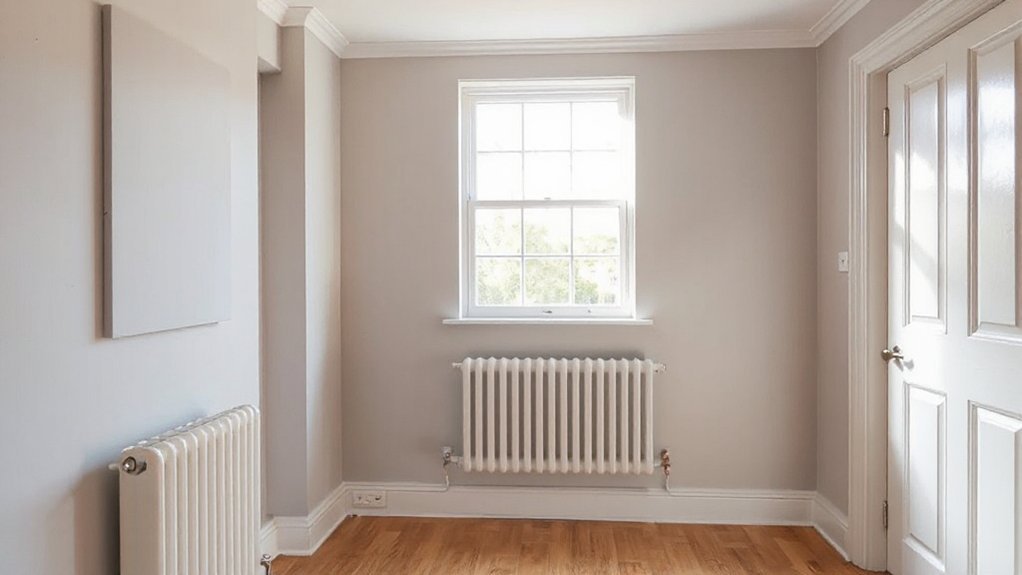
Although paint colour gets most of the attention, the finish is what determines how a wall or woodwork will look and wear in a typical UK home. Choose matt for low-sheen walls and ceilings where you want to mute minor plaster ripples and reduce glare from big south-facing windows.
Pick satin for woodwork and cupboards when you need a smoother, more contemporary look without full shine.
Use gloss on skirting, doors, and handrails where you want strong contrast and a crisp “trim” line.
For paint application techniques, cut in with a 2″ angled brush, then roll with a medium-pile sleeve to avoid lap marks.
For paint color coordination, match trim finish to your palette’s warmth, not just the shade.
Paint Finish Checklist: Sheen, Durability, Washability
You’ll want to match sheen to both the look and the light in your room, from low-sheen matt through satin to high-sheen gloss, because each highlights (or hides) surface defects differently.
Then check durability by room: high-traffic halls and kitchens need tougher finishes than bedrooms, and bathrooms need moisture-resistant systems.
Finally, confirm washability and maintenance—scrubbable, stain-resistant paints cope better with UK condensation, fingerprints, and routine wipe-downs.
Sheen Level Comparison
Before you choose a paint finish, compare sheen levels side by side because gloss isn’t just about looks—it directly affects durability and how easily you can wash marks off.
In UK ranges you’ll see matt (0–5% sheen), satin (10–25%), and gloss (60%+).
Matt hides plaster ripples and roller marks, but it shows burnishing if you scrub hard.
Satin reflects more light, so it highlights defects slightly yet cleans better.
Gloss gives the sharpest reflectance and wipes down fastest, but it exaggerates every nib and needs tighter prep and denibbing between coats.
For Eco friendly options, look for water-based acrylic or hybrid “waterborne” finishes with low VOCs.
For a Cost comparison, matt often needs extra coats, while gloss costs more in labour.
Durability By Room
Sheen gives you a quick read on how a finish will look and clean, but you still need to match it to the room’s wear, moisture, and how often you’ll wipe it down.
In halls, stairs, and kids’ rooms, you’ll want satin or soft-sheen for better scuff resistance on plaster and MDF.
For living rooms and ceilings, matt suits low-contact zones, but pick a tougher “durable matt” where sofas and doorways rub.
In kitchens, utility rooms, and bathrooms, moisture and condensation push you towards satin or gloss on woodwork and tiles-adjacent walls, with mould-resistant specs.
On skirting, doors, and radiators, gloss takes knocks best.
To cut Environmental impact, choose low-VOC water-based systems.
Nail application techniques: de-nib, prime, and keep wet edges.
Washability And Maintenance
How often will you actually wipe the walls down? If it’s weekly in hallways, kids’ rooms, or near light switches, pick satin or soft sheen; they resist burnishing and tolerate repeated cleaning.
Use a damp microfibre with diluted sugar soap, then rinse—aggressive scrubbing will polish matt and leave shiny patches.
In kitchens and bathrooms, choose a washable acrylic or moisture-resistant finish; gloss sheds grease best but highlights defects and needs thorough de-greasing before touch-ups.
For maintenance, keep leftover paint for feathered repairs; matt blends easier than gloss.
When weighing Eco friendly options, look for water-based, low-VOC, scrubbable formulas.
For cost comparison, higher-sheen coatings cost more upfront but reduce repaint cycles and labour over time.
Best Paint Finish for Walls (Living Rooms & Bedrooms)
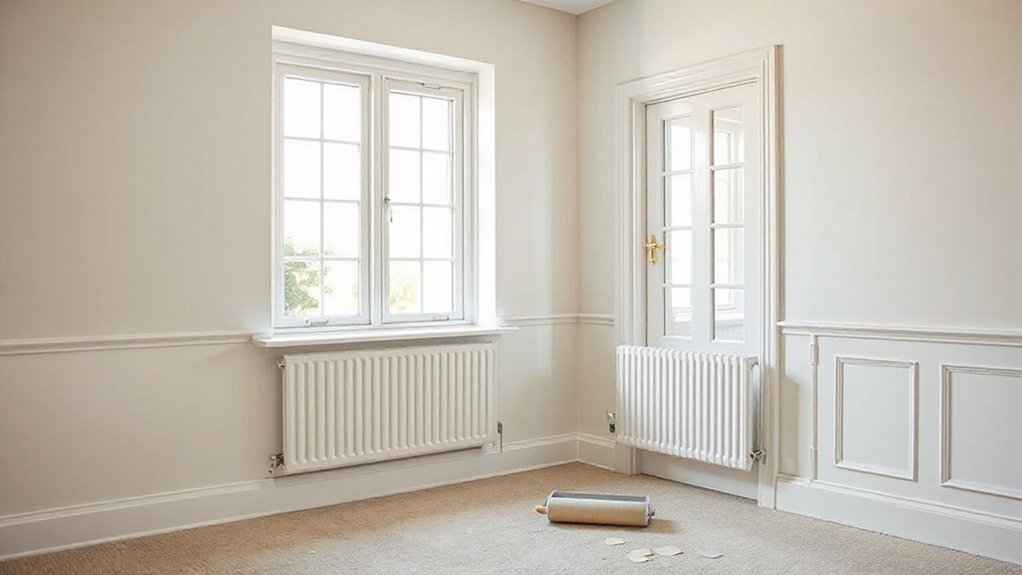
For living rooms and bedrooms, you’ll usually choose between matt and satin on the walls. The right pick depends on how hard the room is used.
You need to balance durability and washability—especially around switches, radiators and skirting—against the finish’s tendency to show scuffs.
Also consider light: matt hides plaster ripples and roller marks better, while satin reflects more and can highlight imperfections under strong daylight or downlights.
Matt Versus Satin Walls
Although matt and satin can use the same colour, they behave very differently on living room and bedroom walls: matt hides uneven plaster and minor scuffs, while satin reflects more light, looks crisper, and shows every ripple, patch repair, and roller mark.
In older UK homes with lumpy skim coats, matt usually looks calmer under side lighting from bay windows or wall lights. If you’re choosing satin, prep has to be sharper: fill, sand, dust off, and apply a consistent mist coat on fresh plaster before your top coats.
Satin can make smaller rooms feel brighter, but it can also emphasise joint lines on plasterboard. For Textured wall finishes, matt keeps the pattern readable without glare.
You’ll also find Eco friendly paint options in both sheens now.
Durability And Washability
Sheen affects more than how your walls look under a bay window; it also changes how well the paint stands up to fingerprints, scuffs, and the odd wipe-down.
In UK living rooms and bedrooms, you’ll usually get the best balance from a durable matt or satin rated “washable” to Class 1/2 scrub resistance (EN 13300). Standard matt marks easily and can burnish when you spot-clean; choose a tough matt if you’ve got kids, pets, or frequent visitors.
Satin resists stains better and lets you use a damp microfibre with mild detergent without lifting colour.
For colour coordination, keep the same paint system across rooms so touch-ups match.
To cut environmental impact, pick low-VOC water-based finishes and avoid overpainting by prepping properly.
Light And Imperfection Hiding
When daylight rakes across a wall—especially from a UK bay window or a strong ceiling downlight—it exaggerates every ripple, filled crack, and roller lap, so your finish choice matters as much as the colour.
For living rooms and bedrooms, you’ll hide defects best with a quality matt or “durable matt”: low sheen scatters light and masks uneven plaster, old lining-paper edges, and patch repairs common in Victorian terraces.
Satin will highlight flatting issues, so only use it on walls you’ve properly skimmed and sanded.
Full gloss is unforgiving and better kept to woodwork.
Nail Color coordination by checking sheen levels on sample cards under morning and evening light.
For paint application, keep a wet edge, de-nib between coats, and avoid over-rolling.
Best Ceiling Paint Finish to Hide Imperfections
Because ceilings catch raking light from windows and downlights, the finish you choose makes a big difference to how bumps, hairline cracks, and poor plastering show up.
For most UK rooms, pick a true matt or “flat matt” ceiling paint: it scatters light, masks unevenness, and avoids the shine that highlights roller marks. Avoid silk, satin, or gloss overhead unless the surface is near-perfect.
If you’ve got patched areas, use a high-opacity matt and apply a mist coat on fresh plaster, then two full coats with a long-pile roller for textured ceilings.
Consider Color psychology too: bright whites bounce light but can exaggerate defects; a soft off-white can calm glare.
Look for eco friendly paints with low-VOC certification to reduce odour indoors.
Best Paint Finish for Woodwork (Skirting, Doors, Trim)
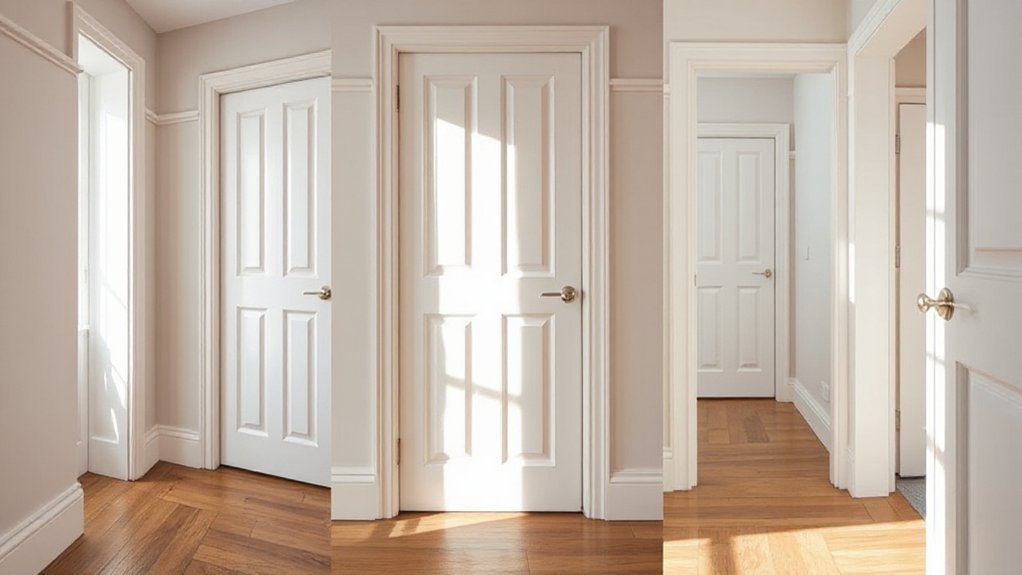
Ceilings benefit from dead-flat paint, but woodwork needs a tougher finish that stands up to knocks, finger marks, and regular wiping.
For skirting, doors, and trim, you’ll usually get the best balance with satinwood: it flows well, resists scuffs, and won’t highlight grain or filler as harshly as full gloss.
Use gloss if you want maximum durability and shine, but expect it to show brush marks unless you lay it off carefully.
Choose matt or “dead matt” wood paint for a modern look, but specify a washable, abrasion-rated product.
For Eco friendly options, pick water-based acrylic or hybrid enamels with low VOCs.
For Historical accuracy in period homes, traditional oil gloss or linseed-based paints suit older joinery.
Best Paint Finish for Kitchens (Grease, Scrubbing, Stains)
Although kitchens see more airborne grease and frequent wipe-downs than any other room, you’ll get the best results with a durable, washable mid-sheen finish (typically satin or soft sheen) that’s rated for scrubbing. Choose a UK-marketed “kitchen paint” with stain resistance and a tight film that won’t burnish patchily when you spot-clean.
Use it on walls, ceilings near cooking zones, and around splashbacks where food staining happens. Avoid dead matt: it marks quickly and can go shiny in hand-contact areas. Full gloss can highlight plaster defects and show roller stipple under downlights.
Prep matters: degrease with sugar soap, rinse well, then apply a stain-blocking primer on nicotine or cooking residue. Eco-friendly paints now offer robust acrylic binders without high odour.
If you’re matching Historical paint finishes, pick soft sheen.
Best Paint Finish for Bathrooms (Steam, Mould, Moisture)
In a bathroom, constant steam and quick temperature swings push moisture into paint films, so you’ll get the best results with a purpose-made bathroom paint in satin/soft sheen (or a durable eggshell) that’s rated for condensation and mould resistance. These finishes form a tighter, more washable film than matt, helping stop staining around showers, windows, and ceiling corners.
Choose a modern acrylic, water-based system with a built-in biocide and a scrub rating suitable for UK condensation cycles. Keep sheen low-to-mid to avoid highlighting plaster defects under downlights, but don’t go flat.
If you follow Paint color trends like warm off-whites or muted greens, pick tintable formulations designed for high humidity. For Eco friendly finishes, look for low-VOC, water-based paints carrying EU Ecolabel or similar UK-available certification.
Common Matt, Satin and Gloss Mistakes (and Fixes)
When you mix up matt, satin and gloss, you usually don’t see the problem until the light hits the wall and every patch, lap mark or scuff shows up.
The commonest mistake is putting matt on high-traffic areas; fix it by switching to durable vinyl matt or satin and touching in with a full-coat re-roll, not spot dabs.
You’ll also get flashing if you don’t seal new plaster. Mist coat with watered-down emulsion, then keep a wet edge and box your paint to avoid shade drift.
With satinwood, don’t skip deglossing; key old gloss with 180–240 grit, wipe, then use adhesion primer.
Brush marks? Lay off with a fine synthetic brush and work to the grain.
Choose eco friendly paint options with low-VOC where possible.
Conclusion
You don’t need a PhD in Sheen Studies to paint a UK house. Use matt on living rooms and bedrooms when you want to hide lumpy plaster and pretend you never touched the wall. Go flat on ceilings so every trowel mark doesn’t shout. Pick satin for woodwork if you like durability without full-on gloss “estate agent shine”. Save gloss for hard-wearing trim. In kitchens and bathrooms, use wipeable, moisture-resistant finishes—because Britain.