Essential Annual Maintenance Checks Every UK Homeowner Should Do
Each year, you should run a documented walk-round: inspect roof tiles from ground and loft, clear and flush gutters, and check downpipes, joints, and falls. You should book a Gas Safe annual boiler service and test controls, pressure, circulation, and safety interlocks. You should press-test smoke, heat, and CO alarms, replace batteries, and confirm interlinking. You should test RCD buttons, check sealant and mastic, and verify drainage, air bricks, and ventilation to prevent damp. Keep photos and receipts; the checklist below shows the full sequence.
Key Takeaways
- Do an annual indoor/outdoor inspection: check damp, sealant, drainage away from walls, and keep air bricks, vegetation, and pipework clear.
- Inspect roof and loft from ground level: spot missing tiles, failed flashings, and staining; investigate issues before redecorating or insulating.
- Clean and test gutters and downpipes yearly: remove debris, flush outlets, check falls, joints, brackets, and repair leaks or sagging sections.
- Service your boiler annually with a Gas Safe engineer: request flue-gas analysis, safety checks, and test thermostats, programmer, TRVs, and system pressure.
- Test all smoke and CO alarms yearly: confirm interlinking works, replace batteries, and change expired detectors; ensure correct placement on each storey.
Your Annual Home Maintenance Checklist (DIY vs Pro)
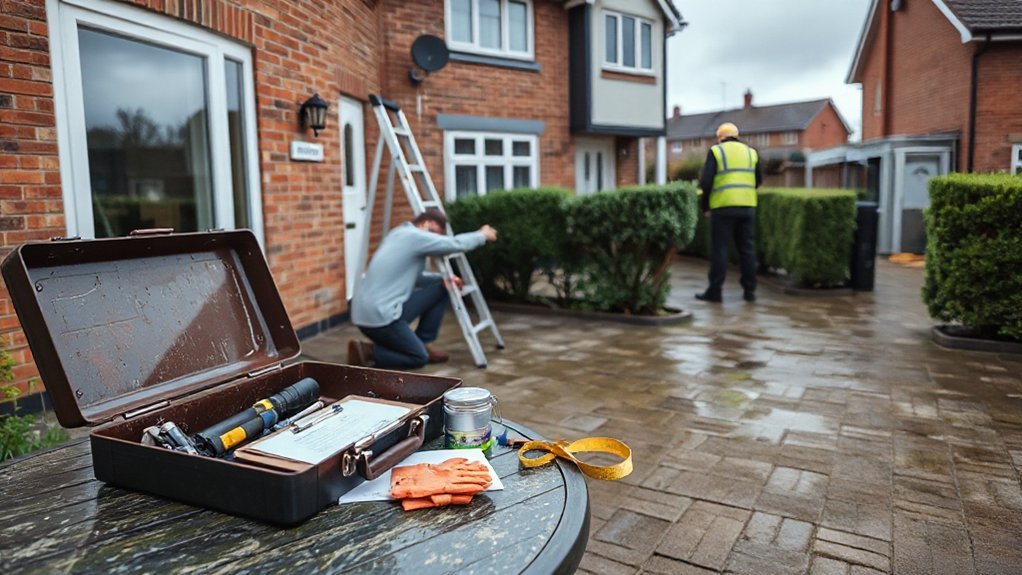
Although you can handle many annual home maintenance tasks yourself, you’ll get better results when you separate quick visual checks from inspections that require calibrated tools, code awareness, or licensed work.
Start DIY with a documented walk-round: check roof tiles from ground level, clear gutters safely, test smoke/heat alarms, and inspect sealant at baths, showers, and external frames.
Review outdoor landscaping: confirm falls drain away from walls, keep air bricks clear, and cut back vegetation from pipework and cables.
Indoors, verify RCD test buttons, look for damp staining, and adjust interior decor only after you’ve confirmed moisture sources.
Book pros for EICR electrics, gas safety, roof access, asbestos surveys, and drainage CCTV.
Keep dated photos, readings, and receipts for traceability and resale.
Annual Boiler and Heating Check: Service and Test
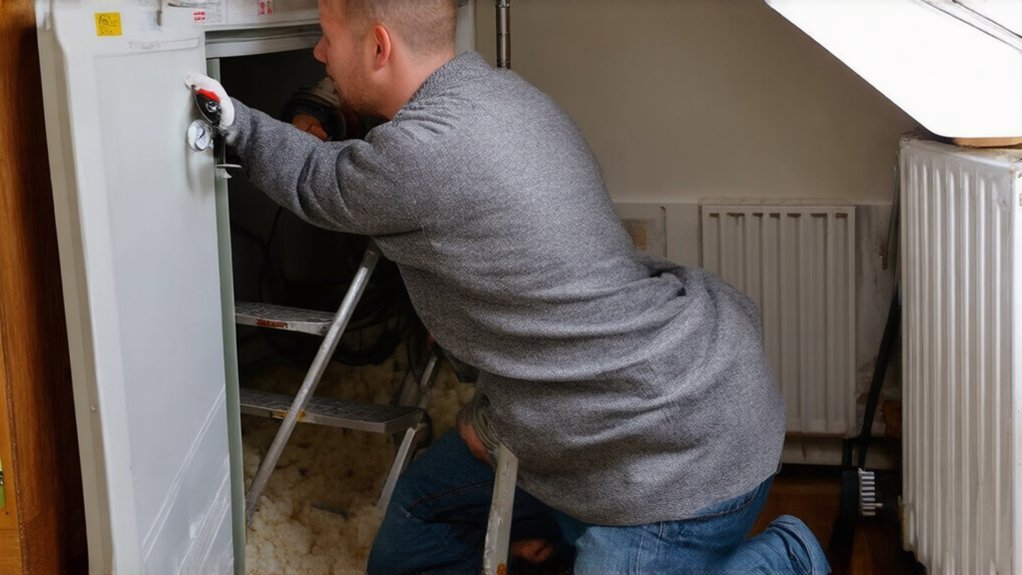
Before you rely on your heating for another season, book an annual boiler service and run a structured heating test to confirm safe combustion, correct controls, and efficient circulation.
Use a Gas Safe engineer for any gas appliance work; ask for flue-gas analysis, burner inspection, condensate trap check, and a tightness test where required.
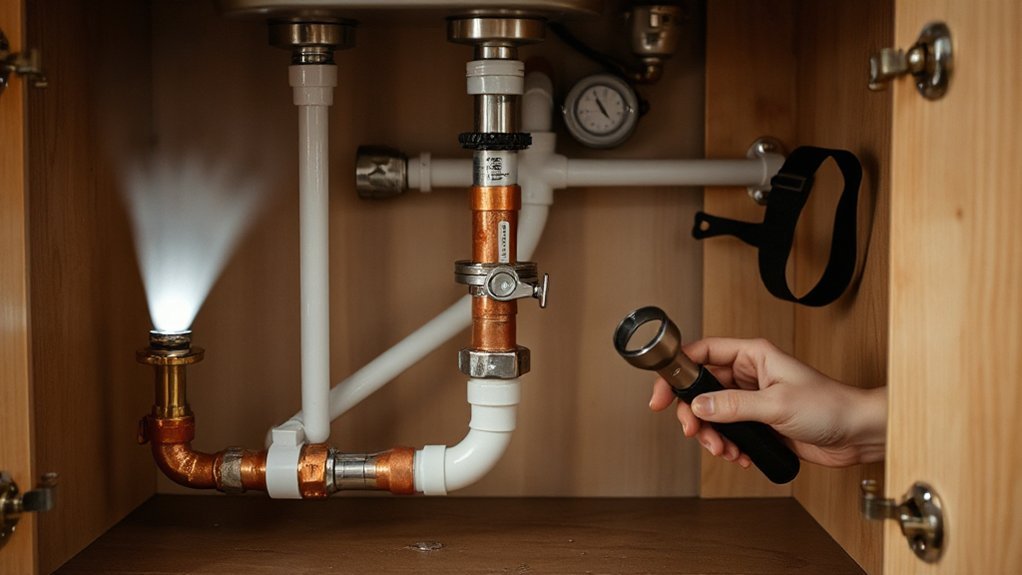
Verify safety devices and interlocks, then confirm the boiler’s operating pressure, expansion vessel charge, and relief valve discharge path.
Test programmer, thermostat, TRVs, and zone valves for correct sequencing.
Bleed radiators, check pump operation, and measure system temperature drop across key emitters to confirm flow.
If sludge is suspected, schedule inhibitor dosing or powerflushing to restore heating efficiency and protect boiler lifespan.
Record results and keep certificates.
Annual Roof and Gutter Check: Tiles, Leaks, Clearing
When you schedule an annual roof and gutter check, inspect the covering and rainwater system as one assembly so you catch small defects before they turn into water ingress.
Start with a visual Roof inspection from ground and loft: look for slipped, cracked, or missing tiles and ridge units, failed mortar, lifted flashings at chimneys, and damp staining on rafters or felt.
Check valleys for debris and split linings.
Then carry out Gutter cleaning: clear leaves, silt, and moss, and flush with water to confirm falls, joints, and outlets discharge freely.
Inspect brackets for sag, and check downpipes for blockages and leaks at collars.
Reseal joints, refix clips, and replace defective sections promptly to maintain weather-tightness.
Annual Safety Check: Smoke and CO Alarms
Even if you only test them occasionally, you should run an annual safety check on every smoke alarm and carbon monoxide (CO) alarm to confirm they power up, sense correctly, and meet current siting requirements.
Press the test button on each unit and verify audibility at bedroom doors; interlinked alarms should all sound. Replace batteries where fitted, and record the change date; replace sealed units at end-of-life per manufacturer.
For fire safety, confirm you’ve got smoke alarms on each storey and on escape routes, and heat alarms in kitchens if installed.
Check alarm placement: mount smoke alarms on ceilings, away from vents; keep CO alarms 1–3m from appliances and not in cupboards.
Replace any yellowed, cracked, or expired detectors immediately.
Annual Winter-Ready Check: Damp, Leaks, and Draughts
Once your alarms pass their annual test, switch focus to the building fabric and weather-tightness. Inspect lofts, eaves, and external walls for staining, mould, salt bloom, or musty odours; trace sources before decorating.
Check gutters, downpipes, flashing, and roof penetrations, then run a hose test and look for internal wetting. Verify air bricks and extract fans aren’t blocked; maintain background ventilation to control condensation.
At windows and doors, confirm smooth operation, intact gaskets, and perimeter mastic; prioritise window sealing where gaps exceed 2–3 mm. Use a smoke pencil around frames, skirtings, and loft hatches to locate draught paths; seal with appropriate tapes, foams, or brush strips.
Complete Insulation improvements only after you’ve eliminated leaks and guaranteed ventilation remains compliant.
Conclusion
Treat your annual maintenance like a compliance audit: one pass, every system. You’ll log what you can DIY and schedule a Gas Safe boiler service, then verify heating performance. You’ll inspect rooflines and clear gutters to keep water paths open. You’ll function-test smoke and CO alarms to meet safety expectations. Before winter, you’ll check for damp, leaks, and draughts. Do it now, not later—small faults become storms on paper and in plaster.…
 Why Professional Painting Matters
 Why Property Repairs Matter
 Popular Garden Improvement Projects