
Smart tech is a good home investment because you can tie upgrades to real savings, lower risk, and stronger resale appeal. You’ll cut utility costs with smart thermostats, room sensors, and lighting that uses occupancy schedules and daylight harvesting. You’ll also reduce costly losses with video doorbells, smart locks, monitored alarms, and leak sensors—especially when paired with an auto-shutoff valve. If you choose Matter/Thread-ready devices with local control, you’ll avoid obsolescence. Next, you’ll see which upgrades pay back fastest.
Key Takeaways
- Smart thermostats and sensor-based lighting cut energy waste, lowering utility bills and often paying back quickly with rebates.
- Connected security devices deter theft, speed emergency response, and reduce loss risk with smarter alerts and monitoring.
- Leak detectors and auto-shutoff valves prevent costly water damage by catching small problems before they become major repairs.
- Air and humidity sensors reveal HVAC, ventilation, and mold risks early, reducing maintenance costs and avoiding bigger health-related issues.
- Standards-based, locally controllable systems improve resale appeal, reduce obsolescence, and keep your home manageable from one unified setup.
Which Smart Home Upgrades Give the Best ROI?
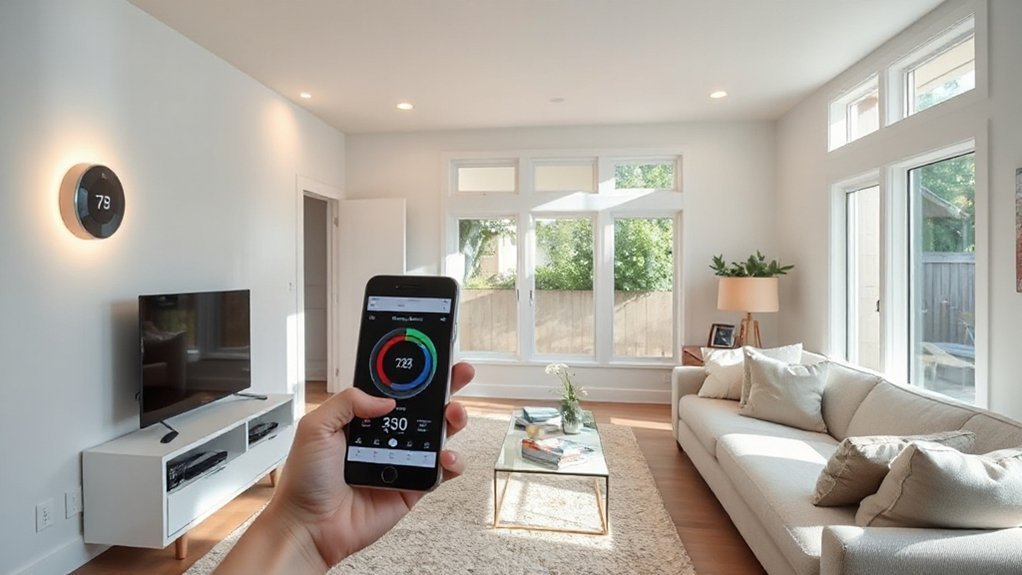
Although smart-home features can feel like “nice-to-haves,” the upgrades with the best ROI are the ones that cut operating costs, reduce risk, and make your home easier to market when you sell.
Start with a smart thermostat and zoned sensors so you control heating and cooling without daily micromanagement. Add smart lighting with occupancy and daylight settings to trim wasted usage and improve comfort.
Prioritize security basics—video doorbell, smart locks, and leak detectors—because they lower perceived risk for buyers and can prevent expensive water damage.
Choose devices that look integrated; Smart home aesthetics matter when buyers scan photos and walk through.
Finally, address user privacy concerns: pick brands with local control options, clear data policies, and strong app permissions.
How to Estimate Payback Time and Savings
Before you buy another device, you can estimate its payback time by treating it like a small capital project: measure the upfront cost, forecast monthly savings (or avoided losses), and stress-test the assumptions.
Add hardware, installation, subscriptions, and Smart home maintenance to get total cost.
Then quantify benefits: lower bills, fewer service calls, reduced water damage risk, or time saved you’d otherwise pay for.
Use conservative inputs and model best/expected/worst cases.
Payback time = total cost ÷ monthly net savings; annual ROI = (annual net savings ÷ total cost).
Validate savings with a baseline month of utility and repair spend, then track post-install changes.
Finally, confirm device compatibility with your hub, wiring, and network so you don’t burn savings on adapters, replacements, or downtime.
Are Smart Thermostats the Best ROI Upgrade?
If you’re chasing the best ROI smart upgrade, you’ll want to compare a smart thermostat’s energy-savings payback against its upfront cost and your real usage patterns.
You can often shorten that payback by stacking utility rebates and local incentives, so it’s worth verifying what you qualify for before you buy.
You’ll also factor in HVAC wear reduction, since smoother runtimes and fewer extreme cycles can cut maintenance and replacement costs over time.
Energy Savings Payback
Where does the payback on smart home tech show up fastest? Usually in heating and cooling, because HVAC is your biggest energy load. A smart thermostat trims waste by learning your schedule, tightening setpoints, and reducing runtime when you’re away.
To estimate your payback, start with Energy audits so you know whether leaky ducts or poor insulation will limit savings. Then review your utility bills to baseline seasonal usage and compare it against post-install trends.
Pair the thermostat with room sensors and a tighter comfort band to capture consistent gains without sacrificing comfort. If your utility offers utility rebates, factor them into your upfront cost, but don’t rely on them to justify the upgrade.
Your best ROI comes from measured, repeatable reductions month after month.
Rebates And Incentives
Although smart thermostats often lead the ROI conversation, rebates and incentives can change the math faster than the energy savings alone. Start by checking your utility’s marketplace, state energy office, and federal tax credits, since many programs stack. A $50–$150 rebate can offset most of the device cost, turning payback from years to months.
You’ll get the best results when you confirm eligibility before you buy: approved model lists, required installers, and submission deadlines can decide whether you qualify. Keep receipts, take screenshots of product pages, and file promptly.
If you rent, ask your landlord about split-incentive programs that reward upgrades even when you don’t pay the full bill. Prioritize offers tied to Energy efficiency and user convenience, not gimmicks.
HVAC Wear Reduction
Rebates can slash your upfront cost, but the quieter ROI often comes from reducing HVAC wear—because the system’s lifespan and repair frequency drive real expenses.
A smart thermostat trims run time by avoiding overshoots and short-cycling, so your compressor and blower face fewer hard starts and heat-soak events. That means less strain, fewer callbacks, and longer intervals between major replacements.
You also get tighter control that supports system efficiency: adaptive schedules, occupancy-based setbacks, and better humidity management keep your equipment operating in steadier ranges. Pair that with alerts for filter changes and abnormal runtimes, and you’ll make HVAC maintenance more proactive.
If your home has wide temperature swings or irregular occupancy, the wear reduction can beat simple energy savings. ROI improves further when you tune setpoints and lock in schedules.
Which Smart Lighting and Plugs Save the Most Power?
When you’re investing in smart home upgrades, smart lighting and plugs deliver the most measurable savings when they cut wasted “always-on” use and prevent lights and devices from running longer than needed.
Start with Smart lighting that supports occupancy sensors, daylight harvesting, and scheduled scenes; you’ll reduce over-lighting in hallways, bathrooms, and exterior fixtures. Choose dimmable LED smart bulbs or smart switches, then set shutoff timers and “away” routines so lights don’t idle.
For outlets, prioritize power plugs with energy monitoring and strong standby control for TVs, game consoles, printers, and chargers. Use auto-off rules tied to inactivity, bedtime, or geofencing, and set thresholds that cut power when loads drop to standby watts.
Review monthly usage reports and adjust schedules to keep savings compounding year-round.
Which Smart Security Devices Prevent Costly Losses?
To prevent expensive losses, you’ll get the best ROI from smart security devices that reduce both the chance and the impact of incidents. Smart doorbell cameras deter porch theft and document events. Connected alarm systems shorten response times, and water leak sensors catch small leaks before they become major repairs.
Next, you’ll compare costs, monitoring options, and alert reliability to choose the setup that protects your home and your budget.
Smart Doorbell Cameras
Even if you already have solid exterior lighting and a basic alarm, a smart doorbell camera can close a costly security gap at the one place every intruder, porch pirate, or scammer has to approach: your front door.
Smart doorbell cameras let you verify visitors in real time, speak through two-way audio, and deter theft by making your home feel monitored.
You’ll also build a record: time-stamped security footage that helps you dispute chargebacks, support police reports, or prove a delivery never arrived.
Look for motion zones that reduce false alerts, person detection that prioritizes relevant events, and cloud or local storage you can access quickly.
Mounted correctly, you’ll capture faces and packages, not just the sidewalk, and you’ll respond faster before loss occurs.
Connected Alarm Systems
Because a siren alone doesn’t stop loss, a connected alarm system ties sensors, cameras, and alerts into one fast decision loop that helps you act before damage or theft escalates.
You get verified events: a motion trip paired with a camera clip reduces false alarms and speeds the right response.
With security integration, you can link door/window sensors, glass-break detectors, and smart locks so the system automatically arms, disarms, and logs access.
You’ll also add outdoor sirens and monitored dispatch to cut response time when you’re away.
User convenience matters: one app manages modes, schedules, and instant notifications, so you don’t ignore alerts.
Choose systems with battery backup, cellular failover, and encrypted data to avoid downtime and protect footage and access codes.
Water Leak Sensors
Connected alarms help you respond fast to intrusions, but water damage often racks up losses quietly, long before an alert reaches you. Water leak sensors reduce that risk by triggering immediate leak detection where failures start: under sinks, behind toilets, near water heaters, washing machines, and sump pumps.
You’ll get a push notification the moment moisture appears, so you can shut off a valve, dispatch a plumber, or pause appliances before floors, drywall, and cabinetry absorb water.
For best ROI, place sensors at every high-risk fixture and pair them with a smart shutoff valve for automated response. You’ll also support Water conservation by catching slow drips that inflate bills and waste supply.
Choose models with loud local alarms, battery health alerts, and app history for audit-ready proof.
Smart Leak and Air Sensors: Avoid Expensive Damage
When small problems hide behind walls or under sinks, they can quietly turn into five-figure repairs before you notice. Smart leak sensors reduce water damage by alerting you at the first sign of moisture, and better sensor accuracy means fewer false alarms that you’ll ignore.
Place sensors near water heaters, dishwashers, toilets, and sump pits, and pair them with an auto-shutoff valve to stop flow fast.
Add smart air sensors to catch humidity spikes, VOCs, and CO—signals that mold risk, ventilation failures, or combustion issues may be building. Set thresholds that match your home’s baseline, then review trends weekly to spot slow leaks, damp basements, or HVAC problems early.
You’ll prevent claims, repairs, and disruption.
Does Smart Home Tech Raise Resale Value in 2026?
Although “smart home” still sounds like a nice-to-have to some buyers, in 2026 it can raise resale value—but only if you treat it as a reliability and efficiency upgrade, not a gadget bundle.
Focus on features buyers can appraise: programmable thermostats that document savings, smart locks that simplify access, and monitored smoke/CO alarms that signal safety.
When you keep controls unified in one app and provide clear setup notes, you reduce buyer friction and help your listing stand out.
Smart home aesthetics matter, too: hide hubs, match switch plates, and avoid cluttered wall tablets.
Address privacy concerns upfront by wiping devices, disabling unneeded data sharing, and explaining local-control settings.
Done right, smart tech supports a higher offer and faster sale.
How to Avoid Obsolete Smart Home Devices
As smart-home standards and app ecosystems keep shifting, you’ll avoid obsolescence by buying for longevity instead of novelty. Choose devices that support Matter, Thread, or widely adopted Wi‑Fi, and favor brands with clear update policies and published support timelines. Don’t lock yourself into a single app; prioritize local control and open integrations so your system still works if a cloud service shuts down.
Before you buy, audit your home’s needs: security, energy savings, accessibility. Then select modular hubs, replaceable sensors, and devices with standard protocols to reduce obsolete gadgets. Budget for technology upgrades by selecting products with firmware updates, backward compatibility, and strong third‑party ecosystems.
Finally, keep documentation, update regularly, and plan a refresh cycle for batteries, routers, and critical controllers.
Conclusion
Smart tech pays you back when you pick upgrades with measurable savings and risk reduction. Start with a smart thermostat, leak sensors, and targeted lighting controls, then track usage in your utility app to estimate payback time. One standout stat: the average insurance claim for water damage and freezing runs about $12,500, so a $50–$150 leak sensor can prevent a five‑figure hit. Buy devices with Matter support so you won’t replace them soon.