
You’ll transform a small garden fastest by zoning it around your daily routes and giving hardscape multiple jobs. Put harvest plants along pass-by paths, and tuck storage, compost, or pollinator corners out of prime sightlines. Trace desire lines from doors to bins, then add gentle curves that extend views toward a single focal anchor. Define areas with consistent edging radii and subtle level shifts. Choose one durable, slip-resistant path material, then add bench-walls, hidden hose storage, and trellises—next you’ll see how each zone locks together.
Key Takeaways
- Zone the garden by daily routines, placing micro-areas for coffee, herbs, bins, and watering along natural walking routes.
- Establish clear desire-line pathways and sightlines, using gentle curves and focal anchors to create depth without clutter.
- Define zones with consistent edging and subtle level changes, like raised beds and slightly sunken seating, to add structure and scale.
- Choose a durable primary hardscape material for main paths, then use secondary finishes to signal transitions and match home architecture.
- Add multifunctional hardscape features—bench walls, under-seat storage, hose hiding, slim paths, and trellises—to save space and improve usability.
Map Small Garden Zones to Your Daily Routines
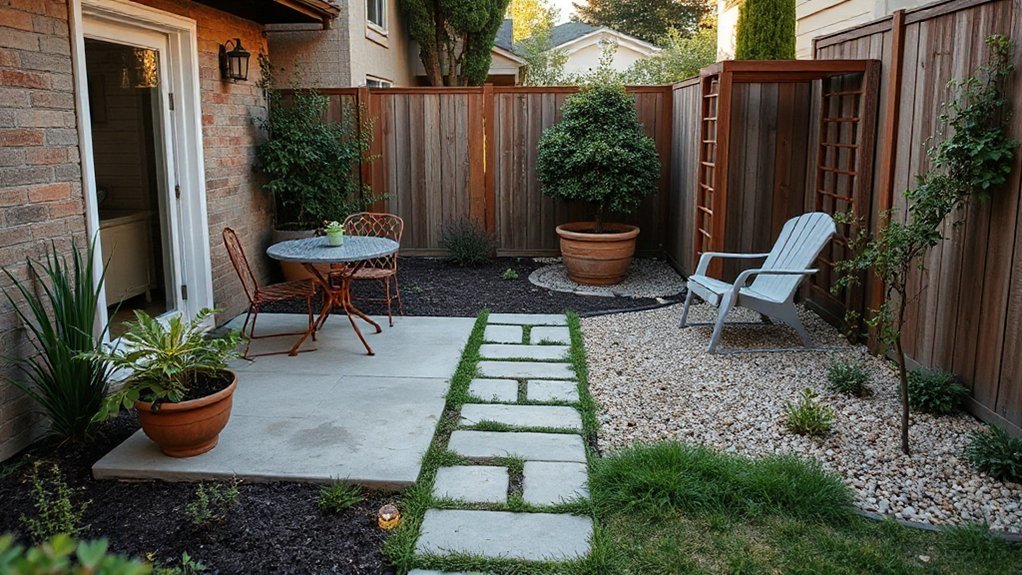
If you align your small garden’s zones with what you already do each day, you’ll use the space more often and waste less effort. Start by listing routine touchpoints: morning coffee, quick herb clipping, kid pickup, bin day, evening watering.
Anchor each action to a dedicated micro-zone sized to the task, not to an idealized plan.
Place harvest crops where you’ll pass daily, and reserve lower-traffic corners for storage, compost, or pollinator habitat.
Let sun, wind, and hose reach set boundaries; you’ll reduce dragging tools and stressing plants.
Use plant selection to match each zone’s conditions: drought-tough edging, shade herbs, heat lovers against masonry.
Plan seasonal planting by rotating short-lived crops into high-use beds while perennials stabilize the rest year-round.
Lay Out Small Garden Flow With Paths and Sightlines
Because a small garden reads in one glance, your paths and sightlines do most of the design work: they decide where you walk, what you notice first, and which areas feel reachable instead of cramped. Start by tracing your natural desire lines from door to patio, tap, shed, or compost, then set a clear primary route.
Keep turns purposeful: a slight curve can hide the end point and stretch perceived depth, but tight zigzags feel fussy. Aim key views at anchors—an urn, small tree, or water bowl—and keep clutter out of that cone.
Use plant selection to frame, not block: low groundcovers near edges, airy stems midline, taller screens at boundaries. Add garden lighting to pull you forward at dusk and keep steps legible.
Define Small Garden Zones With Edging and Level Changes
Even when the footprint stays the same, you can make a small garden feel organized and larger by drawing crisp boundaries with edging and subtle level shifts. Start by mapping use: a seat nook, a working garden bed, and a narrow circulation strip. Run edging lines to reinforce those shapes, keeping curves intentional and radii consistent so the eye reads order.
Next, use grade to separate planting zones without adding clutter. Raise a garden bed 4–8 inches to improve drainage and signal “tended area,” or drop a sitting pad slightly to create enclosure. Keep shift safe: one low step or a gentle 2% slope works in tight yards.
Align edges with door thresholds and key views to lock the layout in place.
Choose Hardscape Materials for Budget and Style
Once you’ve drawn clear zones, your hardscape choices should reinforce them while matching the site’s wear patterns and your budget. Start with the paths and thresholds that take the most traffic, then pick durable, slip-resistant surfaces there: clay pavers, broom-finished concrete, or compacted gravel with stabilizer.
Use one primary material to unify the layout, and a secondary finish to signal passages without clutter.
Let your architecture set the palette: warm brick suits older homes, while large-format porcelain reads crisp and modern. Check drainage and soil movement before you buy; flexible bases handle settling better.
Coordinate garden lighting with joint lines and edges so fixtures feel intentional. Your plant selection should echo textures—fine foliage softens rough stone, bold leaves balance smooth slabs.
Add Space-Saving Small Garden Hardscape Features
When every square foot has to work, you can turn hardscape into furniture, storage, and circulation at the same time. Build a low retaining wall that doubles as a bench and edge it with a narrow cap for setting tools or drinks.
Tuck lidded storage into stair risers or under a seat so hoses and cushions stay off the patio.
Use slim pavers or gravel strips to define a single, direct path; keep joints tight to reduce trip points and simplify sweeping.
Add Vertical gardening by mounting trellis panels to fences or on the sunny side of a shed, then anchor planters to the base.
Choose Water feature options that fit: a wall-mounted spout into a basin, or a self-contained bubbling urn that masks street noise.
Conclusion
When you map zones to your routines, you stop forcing a small garden to “fit” and start letting it work. Paths pull you forward; sightlines pull your attention. Edging and subtle level shifts draw clean borders without shrinking the space. Choose hardscape materials that match your budget and your architecture, then layer in space-saving features—bench walls, slim planters, folding surfaces. Like a well-edited story, every line stays because it earns its place.