
Start by ranking what you’ll do most—deep-focus work, messy making, calls, or writing—then zone the room around daylight and clear circulation. Place your desk perpendicular to the window, lift your laptop to eye level, and add a dimmable key light for calls. Choose slim, multi-use furniture and go vertical with shelves, rails, and labeled drawers. Quiet echoes with curtains, rugs, and fabric boards. Next, you’ll refine layout, storage, and sound.
Key Takeaways
- List primary tasks and essential gear, then assign zones for focus work, making, calls, and storage to prevent cross-task clutter.
- Place the main desk perpendicular to the window for flattering daylight, clear sightlines, and comfortable circulation through the room.
- Choose compact, multi-purpose furniture and vertical storage like tall shelves, wall rails, and floating shelves to maximize floor space.
- Build a video-call setup with eye-level screen, neutral background, dimmable key light, and tidy cables for a polished on-camera look.
- Reduce noise and visual stress using curtains, rugs, door sweeps, labeled drawers, and minimal decor to keep the studio calm and functional.
Define Your Spare Bedroom Office or Studio Needs
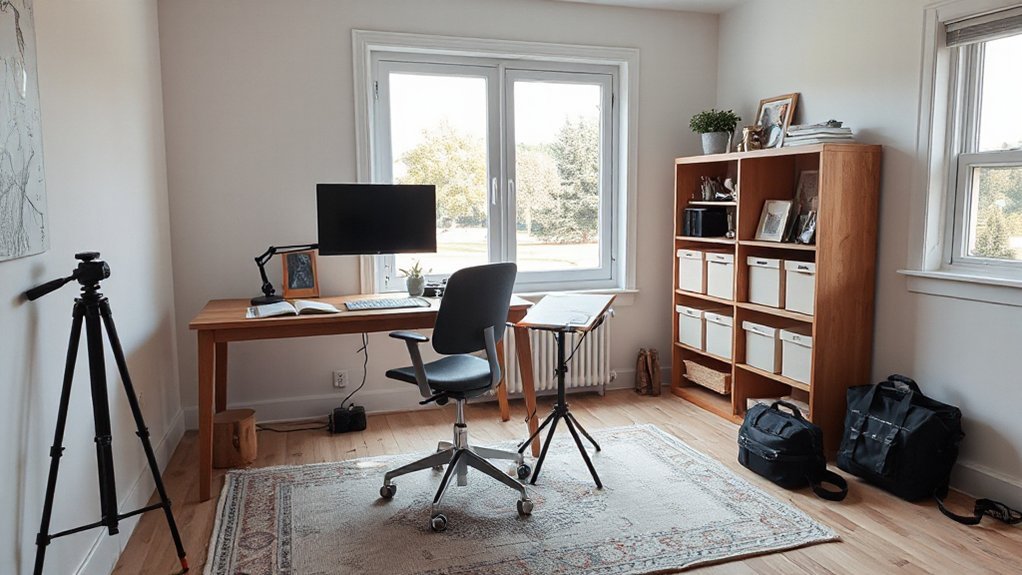
Before you buy a desk or hang a single shelf, get specific about what this room needs to do for you. Decide whether you’re primarily doing deep-focus computer work, messy making, client calls, or quiet writing, and rank those tasks by frequency.
List the gear each task demands—monitor, printer, easel, cutting mat—and note what must stay visible versus what can disappear into closed storage.
Set comfort targets: chair quality, task lighting, acoustic control, and a clear surface you can reset fast.
Choose color schemes that support the mood you want: calm neutrals for focus, warmer tones for creative energy, with one restrained accent.
Do budget planning early so upgrades land where they’ll matter most.
Plan the Spare Bedroom Layout and Zones
Once you’ve nailed down what you need to do in the room, map the space into clear zones that keep work flowing and clutter contained. Anchor your primary zone where daylight hits, then dedicate a secondary strip for making, scanning, or staging projects so tools don’t creep onto your main surface.
Keep circulation tight: leave a straight path from door to window and avoid pinch points near closets. Use vertical boundaries—rugs, curtain tracks, and wall grids—to signal zones without eating floor area.
Coordinate color schemes by zone: muted neutrals for focus, one restrained accent near the creative area for energy. Add soundproofing techniques where noise leaks: seal door gaps, hang dense textiles, and place soft panels on the wall shared with the busiest room.
Choose Compact Furniture for a Spare Bedroom Office
Because spare bedrooms rarely have endless floor space, you’ll get the best office setup by choosing compact furniture that works hard without looking cramped. Pick a slim writing desk or wall-mounted surface that leaves walking clearance and keeps sightlines open.
Choose a chair with a narrow profile and a low back so the room still reads like a bedroom. Add a rolling file cabinet that tucks under the desk, or use a storage ottoman that doubles as guest seating.
Keep shelving vertical: a tall bookcase or floating shelves hold supplies without stealing square footage.
Tie everything together with intentional color schemes—light woods, soft neutrals, or monochrome—to reduce visual noise. Then finish with minimal decor accents like a single framed print or a tidy tray.
Set Up Lighting and Video-Call Basics
Compact furniture keeps your spare-bedroom setup feeling open, and smart lighting makes it look just as polished on camera. Place your desk perpendicular to the window so daylight skims your face without backlighting. Add a dimmable key light at eye level, 45 degrees off-center, then soften shadows with a small bounce card or warm lamp. These lighting techniques keep skin tones even and artwork colors true.
For video conferencing, raise your laptop to eye height and angle it slightly down for a flattering frame. Choose a clean wall, curtain, or neutral art panel behind you, and keep distance so blur looks natural. Use wired earbuds or a small USB mic, and test levels before calls. Keep cords tucked to stay minimal and calm.
Build Storage for Tools, Papers, and Supplies
Keep clutter off your desk by anchoring the room with modular shelving that shifts as your projects change.
Sort papers and small tools into labeled drawers, so you can grab what you need in seconds and keep surfaces clean.
Then use vertical wall storage—rails, pegboards, slim ledges—to lift supplies into sight while preserving floor space and a calm, studio-ready look.
Modular Shelving Solutions
Two modular shelving elements—a wall-rail system and a few stackable cubes—can turn one blank bedroom wall into a clean, flexible storage zone for tools, papers, and supplies. Mount rails at eye level, then snap in shelves, bins, and hooks so you can reconfigure layouts as projects change.
Keep your most-used items within a single arm’s reach of the desk to reduce visual clutter and wasted steps.
Use cubes below for heavier gear and paper reams, and float a slim top shelf for reference books or display pieces that spark artistic inspiration. Choose matte finishes and matching hardware to unify the wall, then leave a few inches of breathing room around the grid for a calmer look.
Add felt-backed shelf liners for subtle acoustic treatment and quieter, cleaner workflows.
Labeled Drawer Organization
When your desktop starts collecting tools, loose papers, and half-finished ideas, shift the mess into a labeled drawer system that hides volume while preserving speed. Choose a compact drawer unit that slides under your desk, then assign categories: cutting tools, chargers, client files, sketch pads, adhesives, and backups.
Use shallow trays for pens and blades, deeper bins for devices and bulk supplies. Label fronts with clean typography or a small label maker, and add color dots to mirror your Color schemes for instant scanning.
Keep one “active” drawer for today’s project and reset it nightly. For Personal decor, swap plain pulls for brass, wood, or matte black, and line drawers with subtle patterned paper that matches your studio mood.
You’ll stay tidy without sacrificing style.
Vertical Wall Storage
Although floor space disappears fast in a spare bedroom, you can reclaim order by building upward with a clean, modular wall system that stores tools, papers, and supplies at arm’s reach. Mount a rail-and-hook track above your work zone, then add slim shelves for notebooks, archival boxes, and a printer stand.
Install pegboard panels for scissors, tape, rulers, and brushes, and keep the layout visually calm by repeating matching bins and hardware. Use magnetic wall strips for metal tools, blades, and binder clips, so small essentials don’t crowd your desktop.
Add a vertical file pocket for current projects and a lidded tray for loose parts. Pair the system with fold away desks, keeping circulation clear when you’re done.
Add Finishing Touches: Ergonomics, Acoustics, and Decor
Next, tame sound without bulky panels. Hang a thick curtain on a ceiling track, layer a low-pile rug, and place a fabric pinboard where reflections hit first.
If you record or take calls, add a small desktop mic shield and close gaps with a door sweep.
Finish with decorative accents that stay edited: one warm lamp, one plant, and a tight color palette that repeats across textiles and art.
Conclusion
You’ve turned a spare bedroom into a calm, high-function workspace by defining what you do, zoning the room, choosing compact pieces, nailing lighting for calls, and building storage that hides clutter fast. Picture a 10’×11′ room: you mount a slim desk under the window, tuck a rolling cart in the closet, and hang two cork rails above. With a supportive chair, a soft rug for acoustics, and one art print, it looks intentional—and works hard.