
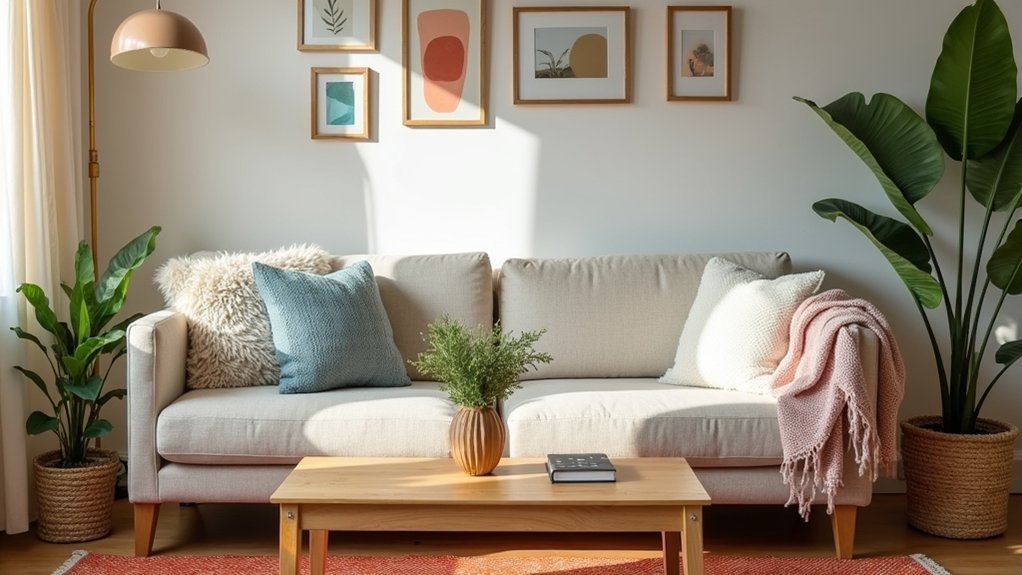
How to Refresh a Tired Interior With Budget‑Friendly Decorating Tricks
Refresh a tired interior on a budget by clearing visual noise first: edit surfaces to three purposeful items and corral remotes and cords in a lidded box. Rearrange furniture around one focal point to improve flow, then layer lighting with a floor lamp and warm bulbs for an instant lift. Add texture with a new throw and a couple of cohesive pillows, hang curtains higher, and restyle shelves in thirds. Next, thrift one quality accent to finish the look.
Key Takeaways
- Declutter surfaces to three purposeful items, then add one natural element for warmth without visual noise.
- Rearrange furniture around a single focal point, keeping clear walkways to improve flow and make the room feel intentional.
- Refresh impact cheaply with paint and lighting: try a warm neutral, swap bulbs, and add a floor lamp or dimmer.
- Update textiles for instant change: add a textured throw, simplify pillows, and hang curtains higher for a tailored look.
- Thrift for character: choose one quality vintage piece, reframe or rewire if needed, and keep the palette consistent.
Declutter Fast to Refresh a Tired Interior
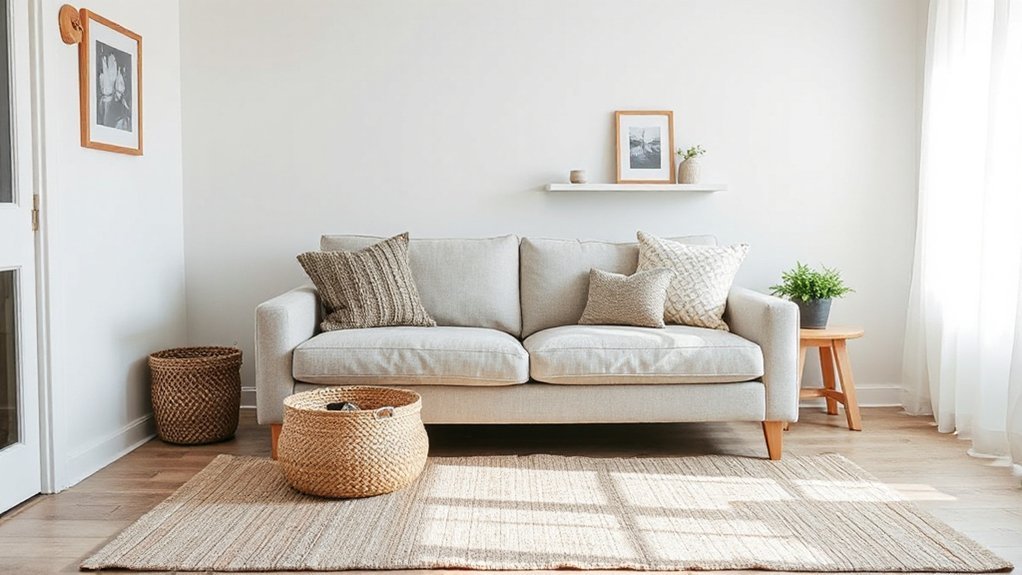
If your space feels flat no matter how much you style it, start by decluttering—fast. Clear surfaces first: coffee table, console, nightstand. Edit to three purposeful items per zone so your eye can rest and your best pieces can read as intentional. Use a minimalist approach: keep what you use weekly, store what you love seasonally, and donate the rest.
Corral loose remotes, cables, and papers into one lidded box, then reset daily in two minutes.
Next, streamline visual noise. Match hangers, reduce pillow variety, and group books by height or color for a cleaner rhythm.
Add natural elements only after you subtract: one leafy stem, a wood tray, or a stone bowl brings warmth without clutter.
Rearrange Furniture to Refresh a Tired Room
Once you’ve cleared the clutter, you can refresh the room fast by rearranging what you already own.
Start by defining a new focal point, then shift key pieces to improve flow and everyday function.
Finally, rebalance scale and spacing so seating, surfaces, and pathways feel intentional and current.
Define A New Focal Point
Although your décor may still be stylish, a room can feel tired when the eye has nowhere fresh to land, so define a new focal point by rearranging your furniture around a single intentional anchor. Choose one statement element and let everything else support it: the fireplace, a large artwork, a sculptural floor lamp, or a bold area rug.
Pull seating to face that anchor and give it breathing room with a clear perimeter. Then tighten the vignette with one edited surface—coffee table, console, or mantel—so the focal zone reads intentional, not cluttered.
For trend-aware focal point ideas, try pairing warm wood with matte black accents, or layering tonal neutrals with one saturated accent. You’ll get a crisp visual centerpiece without buying anything new.
Improve Flow And Function
When your room feels tired, the issue often isn’t the décor—it’s the way you move through it, so refresh the space by rearranging for better flow and function. Start by mapping your main paths: door to seating, seating to storage, and storage to workspace.
Pull the largest piece to anchor the zone, then rotate secondary seating to support conversation and sightlines.
Next, align daily-use items with intuitive reach. Swap a side table for a slim console, or slide a cabinet closer to where you actually drop keys and chargers.
Add discreet storage solutions—lidded baskets, a tray, or an ottoman with hidden space—to reduce visual noise.
Finish with color coordination: group accessories by tone to guide the eye and make the new layout feel intentional.
Rebalance Scale And Spacing
If your furniture feels “off” even after a tidy-up, scale and spacing usually need the reset. Start by anchoring the room with the largest piece, then position secondary seating to create clear sightlines and walking paths.
You’re aiming for scale balance: pair bulky sofas with lighter chairs, and keep low pieces near windows to preserve openness. Pull furniture off the walls when you can; a few inches often makes the layout feel intentional and current.
Next, check spacing uniformity. Keep consistent gaps—about 16–18 inches between seating and a coffee table, and 30–36 inches for main pathways.
Finish by centering key groupings on rugs or lighting, so zones read calm, not crowded.
Use Simple Paint Updates for Big Impact
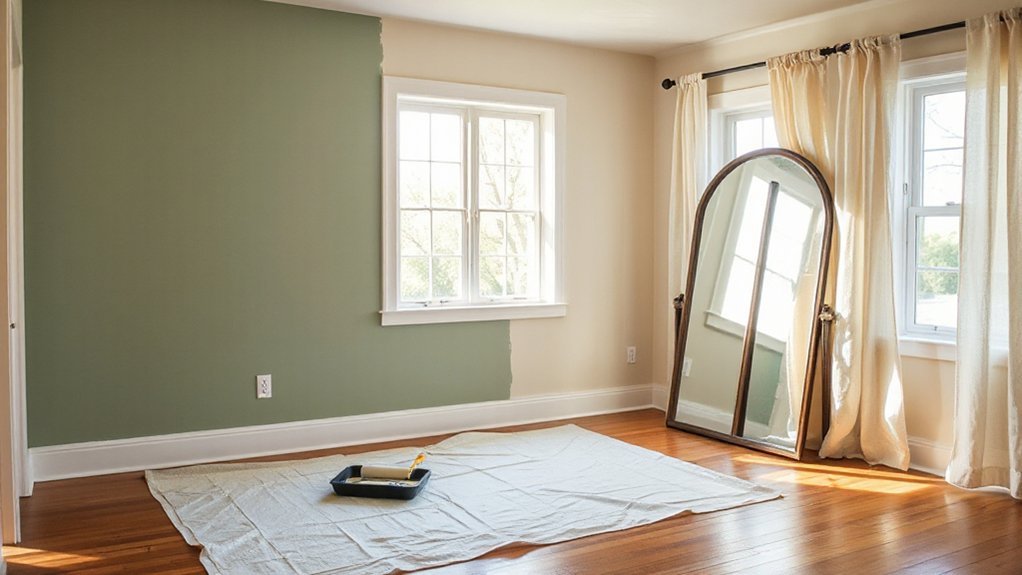
How do you refresh a tired room without a full renovation? Start with a smarter wall color choice that supports the room’s proportions and mood. If the space feels cramped, you can shift to soft, warm neutrals or a pale tint that visually recedes. If it feels flat, you can add depth with a saturated accent wall or a color-drenched nook that frames a focal point.
Use paint techniques for architectural polish on a budget. Try painting trim a few shades darker than the walls for crisp definition, or go tonal for a seamless, modern envelope.
You can also paint the ceiling slightly lighter to lift the room, or add a half-wall band to anchor furniture and guide sightlines.
Upgrade Lighting for an Instant Lift
Even though paint sets the tone, lighting controls how the room actually reads—its scale, warmth, and focal points. Swap a dated ceiling fixture for a clean-lined pendant or semi-flush mount to modernize instantly.
Then layer your sources: add a slim floor lamp for vertical lift and a task lamp where you read or work so corners don’t fall flat.
For flexibility, install dimmers or try Smart lighting bulbs you can tune from crisp daylight to soft amber. Use Mood lighting to highlight art, shelving, or a favorite chair with a plug-in picture light or adhesive LED strips.
Keep bulb temperatures consistent (2700–3000K) for a cohesive glow, and upgrade to higher CRI LEDs so colors look accurate, not washed out.
Swap Textiles for Color, Comfort, and Texture
Swap textiles to refresh the room’s palette and make it feel more comfortable without changing the layout. You can layer rugs and throws to add warmth and definition.
Then update curtains to introduce a clean hit of color at window level. Finish by mixing pillows in varied weaves and finishes for on-trend texture that reads intentional, not busy.
Layer Rugs And Throws
Two well-chosen layers—one rug underfoot and one throw within reach—can refresh a tired interior faster than most furniture swaps.
Start by scaling up: place a neutral, flatweave base rug to anchor the room, then layer rugs with a smaller patterned piece to define the seating zone and introduce color. Keep the top rug slightly offset for a relaxed, designer look, and let at least 8–12 inches of the base show for contrast.
Next, add throws where you lounge: over the sofa arm, at the end of the bed, or in a basket beside a chair. Mix textures—bouclé, chunky knit, washed linen—to soften hard lines and boost comfort.
Repeat one hue from the rug in your throw for cohesion, not matchy-matchy.
Update Curtains For Color
Where can you add the biggest hit of color without touching a paintbrush? Update your curtains. A new panel instantly reframes the room, pulls together existing tones, and makes windows feel intentional.
Choose Curtain patterns that echo your art or rug—subtle stripes for modern calm, botanicals for a fresh, relaxed vibe, or a solid velvet for depth and warmth.
Dial in the proportions by adjusting curtain length. Hang rods a few inches below the ceiling and extend them past the frame so fabric stacks on the wall, not the glass.
Let panels kiss the floor for a tailored look, or puddle slightly for a softer, boutique feel. Stick to affordable liners to improve drape and light control.
Mix Pillows For Texture
If your room feels flat but you don’t want a major overhaul, mix pillows to add instant texture and a hit of color. Start with a tight palette pulled from your rug or art, then vary materials: linen, bouclé, velvet, and a nubby knit. This Textile pairing builds depth even on a neutral sofa and makes the seating zone feel more intentional.
Use Pattern mixing with a simple rule: one large-scale print, one small geometric, and one solid or subtle stripe. Keep undertones consistent so the set reads curated, not chaotic. Swap in a lumbar pillow to sharpen proportions, and rotate covers seasonally for a low-cost refresh.
Finish with inserts one size larger than the covers for a plush, tailored look.
Restyle Shelves and Surfaces With What You Own
Even when your room’s bones feel dated, you can make it look intentional by restyling shelves and surfaces with pieces you already own. Start by clearing everything, then edit back in thirds: books, objects, and breathing space.
Stack a few books horizontally to create height, then top them with a candle or small bowl for a Personalized display.
Use Surface organization to keep the look crisp: corral remotes on a tray, group like items, and hide loose cords behind books or a box.
Vary finishes so it feels current—mix matte ceramics with glossy glass, or warm wood with black accents.
Anchor each shelf with one larger piece, then sprinkle smaller items forward.
Rotate art, frames, and plants between rooms to refresh the whole view fast.
Add Character With Budget-Friendly Thrift Finds
Once you’ve refreshed your shelves with what you already own, thrift stores become the quickest way to layer in character without spending much. Go in with a tight edit: one sculptural vase, a framed print with a strong mat, or a small brass lamp can shift the room’s mood fast.
During thrift shopping, look for quality materials—solid wood, ceramic, linen—so pieces feel intentional, not random.
Use Vintage accents to add contrast to modern basics: pair an aged mirror with a clean console, or stack worn hardcovers under a sleek candle. Keep your palette consistent and vary texture for depth.
Before you buy, measure key surfaces and check scale against your seating so everything lands balanced and curated. Clean, rewire, or reframe as needed.
Conclusion
You’ve cleared the clutter, shifted the layout, and refreshed the walls—now your space is already breathing easier. But don’t stop yet. The real transformation shows up in the details: a warmer bulb, a layered throw, a rebalanced shelf, a single thrifted accent with attitude. Stand at the doorway and look again. What still feels “off”? Fix that one thing next, and your tired interior won’t just look updated—it’ll feel intentionally designed.…