
Patio Cleaning Made Easy: Keeping British Paving Slabs Moss‑Free All Year
Check the forecast and don’t start if rain, frost, or high winds are due; wear gloves, eye protection, and non-slip boots, then sweep grit and clear furniture. Dry-scrape thick moss, lightly wet slabs, and scrub joints downhill with a stiff brush, keeping runoff controlled. Rinse with low-pressure water and re-scrub dark patches. Match cleaners to your paving type to avoid etching. Pressure wash gently, then top up jointing sand. Next, you’ll tighten the routine.
Key Takeaways
- Check weather, clear clutter, sweep grit, and protect plants and vents before cleaning to prevent slips, damage, and runoff.
- Dry-scrape thick moss, then lightly wet slabs and brush joints downhill; keep the surface damp to limit mess and regrowth.
- Use paving-safe cleaners: alkaline for concrete, pH-neutral for sandstone/limestone, and non-acidic low-residue products for granite, porcelain, or brick.
- If pressure washing, use a fan nozzle at low pressure from 30–45 cm, working diagonally across joints to avoid etching and joint loss.
- Refill joints with kiln-dried sand, then apply a patio biocide in spring and autumn; improve drainage and sweep weekly to deter moss.
Quick Patio Cleaning Prep and Safety Checks
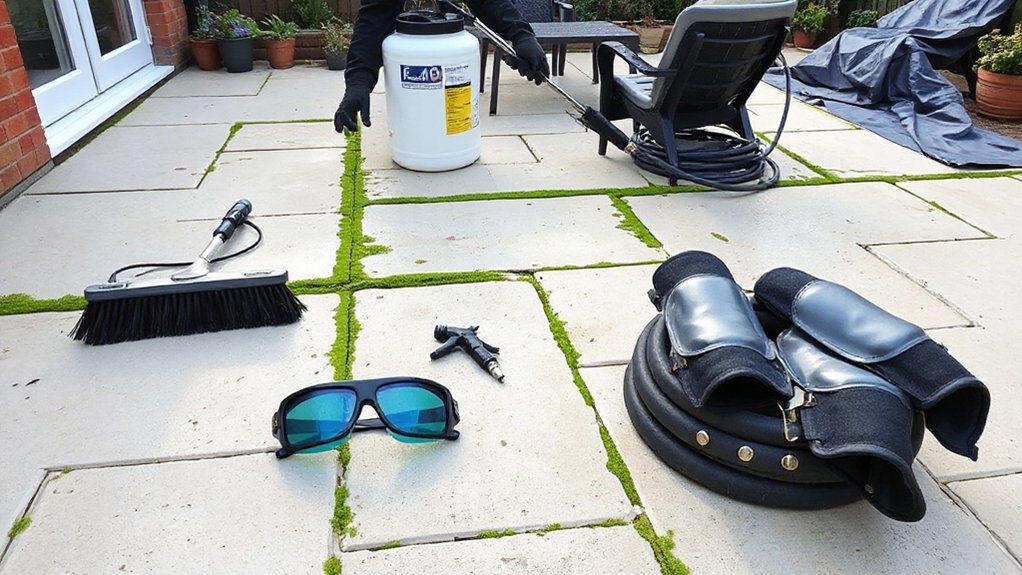
Before you start spraying or scrubbing, take two minutes to prep the area and confirm it’s safe to work. Check the forecast and stop if frost, heavy rain, or high winds are expected. Put on gloves, eye protection, and non-slip footwear, and keep children and pets indoors. Sweep off loose grit to reduce slip risk and prevent abrasive damage.
Move Garden furniture, pots, and mats off the slabs, then cover nearby plants and air bricks. Inspect paving for rocking slabs, cracked joints, and trip edges; mark hazards and avoid loading them.
Identify drainage routes so runoff won’t enter ponds or borders, supporting Wildlife protection. If you’ll use electricity, route cables away from water and use an RCD.
Remove Moss and Algae Fast (Step-by-Step)
With the area cleared, hazards marked, and runoff routes checked, you can tackle moss and algae while keeping slips and plant damage under control. Put on gloves, goggles, and grippy footwear.
Lift remaining Garden furniture onto dry ground, not the lawn, to avoid scuffing during lawn maintenance.
Dry-scrape thick moss with a plastic scraper, then sweep debris into a bag.
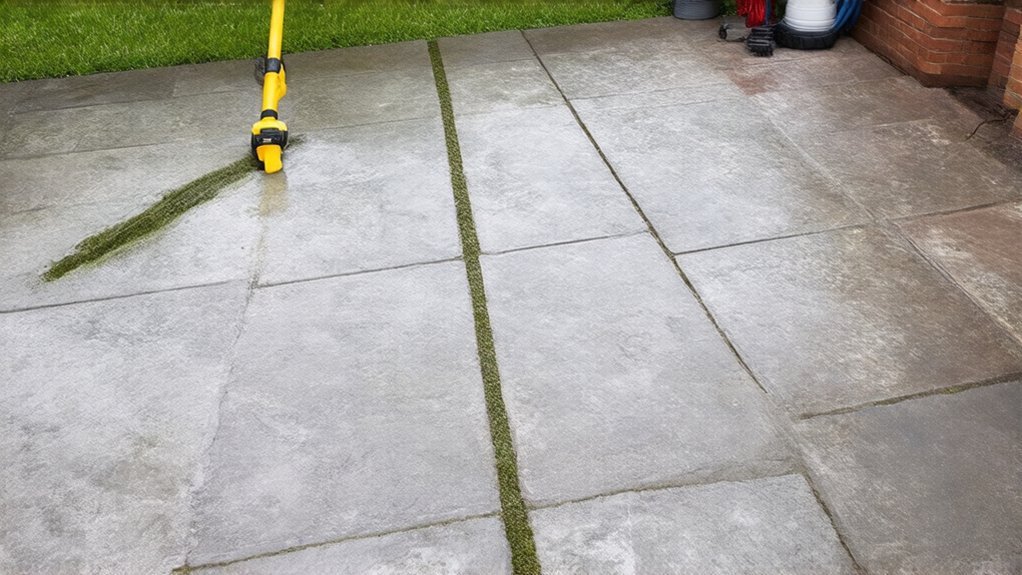
Wet the slabs lightly to reduce dust, then scrub joints with a stiff brush, working downhill so you don’t step onto slimy sections. Keep the surface damp, not flooded, to limit runoff.
Rinse with a low-pressure hose, directing water to your planned drain point.
Re-scrub any dark patches immediately.
Finish by brushing clean, checking for slick spots before reopening the area.
Choose a Patio Cleaner by Paving Type
How do you pick a cleaner that won’t etch, stain, or weaken your paving? Start by identifying the slab: concrete, sandstone/limestone, granite, porcelain, or brick.
For concrete, use an alkaline patio detergent or sodium percarbonate; avoid strong acids that dissolve cement paste.
For sandstone and limestone, choose a pH‑neutral stone cleaner; acids and bleach can bleach pigments and attack calcite.
For granite and porcelain, use a non‑acidic, low‑residue cleaner; solvents can leave films on textured finishes.
For brick, use a mild alkaline cleaner; avoid hydrochloric acid unless the manufacturer approves.
Protect garden furniture with covers and rinse overspray.
Plan plant placement: shield borders, wet leaves first, and avoid runoff into soil.
Avoid Damage: Pressure Washing and Joint Care
Although a pressure washer can strip grime fast, it can just as quickly erode soft stone, etch concrete paste, and blast out jointing sand if you run too much pressure or hold the lance too close.
Set the machine to a fan nozzle, start at the lowest effective bar, and keep a 30–45 cm standoff. Work diagonally across joints, not along them, and test a hidden slab first.
Wear eye protection, gloves, and boots; keep cables and pets clear.
After washing, inspect joints for voids. Replace lost sand with kiln‑dried sand or compatible jointing compound, brushing it in dry and tamping lightly.
For Eco friendly solutions, avoid acids; use water, stiff brushing, and controlled rinse during DIY maintenance.
Stop Moss Returning: Aftercare and Yearly Routine
Once you’ve washed the patio and re-packed any lost jointing, lock in those results with aftercare that removes spores and keeps the surface dry between cleans. Apply a patio-safe biocide on a still, dry day; wear gloves, goggles, and long sleeves, and keep pets off until fully dry. Rinse overspray from planting and collect runoff where possible.
For Moss prevention, improve drainage: clear gullies, sweep grit weekly, and trim overhanging shrubs to increase sunlight and airflow. Inspect joints monthly; top up kiln-dried sand or resin jointing before gaps widen.
For Seasonal maintenance, treat in spring and early autumn, then do a quick winter check after storms for pooling, algae film, and lifted slabs. Record dates and products so you don’t over-apply chemicals unnecessarily.
Conclusion
In the UK, surveys suggest around 60% of householders see moss return within a year if they skip aftercare—so don’t. You’ve prepped safely, removed growth methodically, and matched cleaner to your slab type. Now lock in results: rinse residues, re-sand joints, and keep drainage clear. If you pressure wash, use a fan nozzle and low PSI to protect pointing. Schedule a light biocide treatment and quarterly sweeps, and you’ll stay moss-free.…