
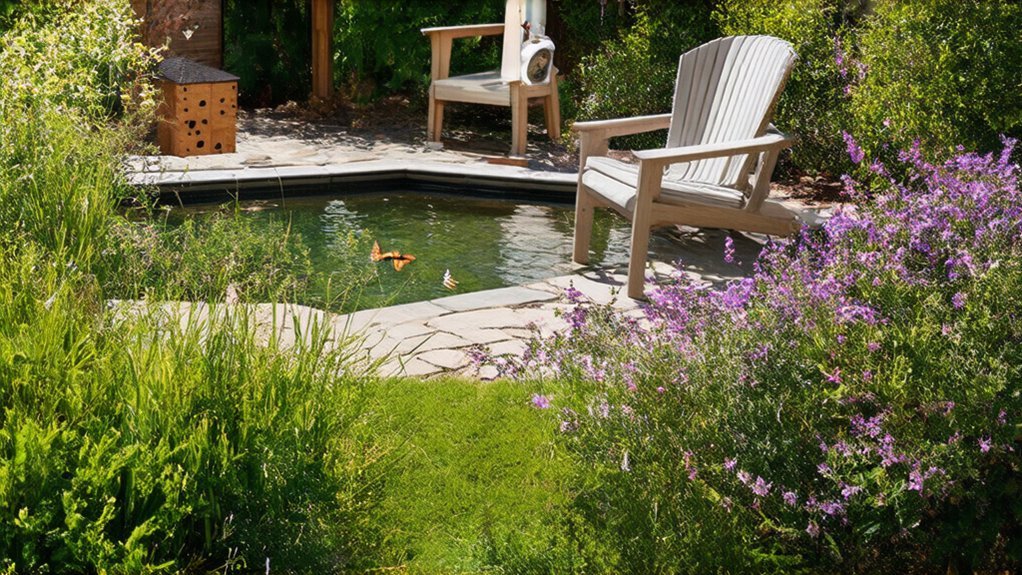
Designing a Wildlife‑Friendly Garden That Still Looks Stylish
Start by mapping sun, wind, drainage, and canopy so you can place layered zones—groundcovers, shrubs, and small trees—into connected forage corridors. Keep it stylish with tight steel or stone edging, repeated plant drifts, and open sightlines while tucking dense cover behind focal planes. Choose locally native, single-flower species that stagger blooms from early spring to late fall, matching drought or swale conditions. Add a shallow, recirculating bowl with a stone ramp and discreet nesting sites; next, you’ll refine details and maintenance.
Key Takeaways
- Map sun, wind, drainage, and canopy first, then place layered planting zones and corridors while preserving clean sightlines and access.
- Choose locally native, pollinator-friendly plants with open single blooms, plus larval hosts, and stagger flowering for season-long nectar.
- Layer structure intentionally—trees, shrubs, perennials, groundcovers—stepping heights toward paths and repeating drifts for a modern, cohesive rhythm.
- Add discreet water and nesting micro-sites: shallow recirculating bowls with stone ramps, and hidden bee blocks or boxes with clear flight paths.
- Keep it polished with crisp steel or stone edging, selective leaf litter under shrubs, spring cutbacks for overwintering insects, and minimal-chemical pest thresholds.
Plan a Modern Wildlife-Friendly Garden Layout
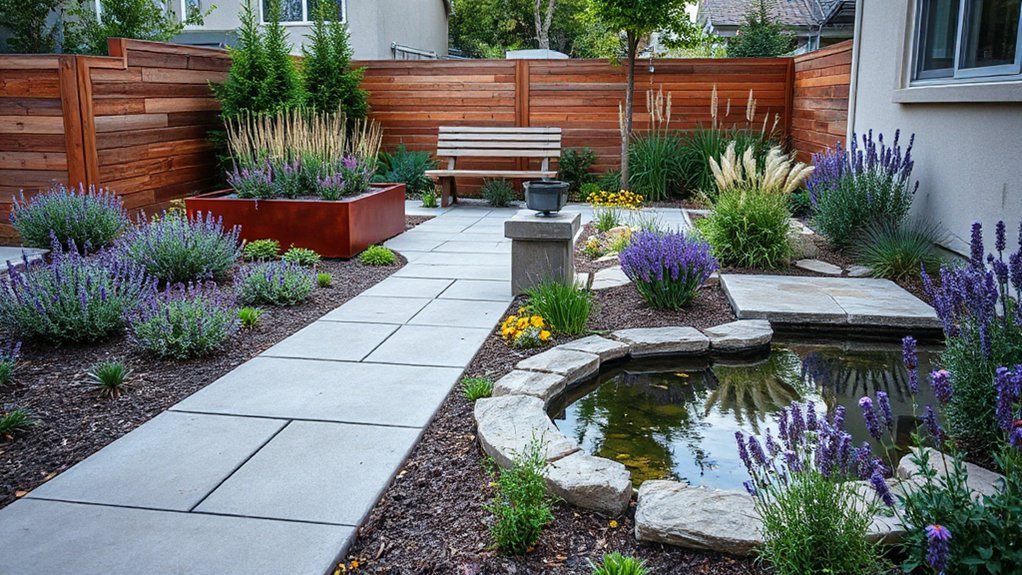
Although a wildlife‑friendly garden looks effortless, you’ll get better habitat performance when you plan the layout like a modern site scheme: map sun and wind exposure, drainage paths, and existing canopy first. Then place layered planting zones (groundcover–shrub–small tree) to create continuous shelter and forage corridors.
Next, establish edge conditions: tighten hardscape lines, keep sightlines open, and tuck dense cover behind focal planes so the garden reads clean from the house. Connect habitat patches with Wildlife corridors sized to your site—hedgerows, stepping‑stone beds, and fence‑line thickets—while preserving a maintenance route for access.
For Urban integration, align corridors with neighboring trees, alley plantings, and green roofs. Buffer light and noise using berms, screens, and water‑infiltration swales. Route irrigation to support drought‑resilient zoning.
Choose Native Plants for Season-Long Blooms
Once your layout maps sun, wind, and drainage and links habitat patches with corridors, you can tune the planting matrix so nectar, pollen, seeds, and cover persist from early spring through frost.
Start with locally native species keyed to your ecoregion, then select cultivars only when they don’t dilute floral access or phenology.
Build Pollinator friendly plant choices by prioritizing open, single flowers, high nectar volume, and larval host function.
Use Seasonal bloom strategies: schedule overlapping flowering windows, stagger genotypes for extended peak, and include early and late resources to prevent forage gaps.
Specify drought‑tolerant natives in hot, reflective zones, and moisture‑adapted taxa in swales so bloom timing stays stable.
Finish with repeated drifts to keep a clean, modern rhythm.
Layer Plants for Height, Habitat, and Texture
After you’ve set your seasonal bloom sequence, build structure by stacking plants into vertical layers that mimic local habitat and read as intentional design.
Use Vertical planting: canopy or small trees for shade and perches, a shrub midstory for shelter, then herbaceous drifts for nectar and larval hosts. Finish with a ground layer of sedges, low natives, and leaf‑litter pockets to stabilize soil, cool roots, and support invertebrates that feed birds.
You’ll get cleaner sightlines if you repeat forms—clumps, mounds, and airy spires—rather than mixing everything randomly. Keep taller masses to the back or center, and step heights down to paths for a curated edge.
Stitch beds together with Pollinator corridors: continuous, layered strips that connect sunny nodes across your garden.
Add Modern Water and Discreet Nesting Sites
Layered planting gives wildlife cover and foraging routes, but you’ll anchor daily use of the space by adding reliable water and nesting micro‑sites that stay visually quiet.
Choose a shallow, recirculating rill or bowl with a dark liner so reflections read crisp—water feature aesthetics improve when edges align with paving modules and planting masks the pump access. Keep a 2–5 cm beach zone or textured stone ramp so bees, birds, and hedgehogs can drink safely.
For nesting, build in nesting site concealment: tuck swift or sparrow boxes behind a slatted screen, set bat tubes under a clean fascia, and stack drilled hardwood blocks inside a ventilated cabinet. Face openings east or southeast, add shade, and keep flight paths clear.
Keep It Neat With Low-Maintenance Routines
Even if you’re aiming for a loose, habitat-rich look, you’ll keep the garden reading intentional by setting a few low-maintenance routines that double as ecological management. Edge beds with steel or stone, then shear “soft” plantings back to that line twice a year so structure stays crisp while stems and seedheads persist through winter.
For garden cleanup, swap broad raking for selective edits: lift only smothering leaf mats from paths, leave 5–7 cm of leaf litter under shrubs, and compost diseased material hot.
Cut perennials to 15–20 cm in early spring to protect overwintering insects. For pest control, use thresholds: scout weekly, hand-remove hotspots, blast aphids with water, and favor habitat tweaks—mulch consistency, airflow, and diverse flowering strips—over chemicals.
Conclusion
You don’t have to choose between crisp design and biodiversity. When you plan clean sightlines, specify native, season‑long bloomers, and build layered structure, you’re creating habitat that reads intentional. Add a slim rill or bowl for water and tuck nesting tubes behind a slatted screen. For example, a small urban courtyard swapped sterile gravel for drifts of native salvia and grasses; within weeks, bees arrived, birds bathed, and the space still felt minimalist.…