
Start by capping your spend and sketching a quick floor plan, then center the bed on the strongest wall and keep 24–30 inches clear on each side for easy flow. Swap bulky pieces for low, calm furniture and align drawers away from pathways. Refresh the bed with crisp percale, a quilt, and a chunky knit throw, then add nubby or velvet accents. Layer warm, dimmable 2700–3000K lighting and hang drapes high and wide with sheers behind blackout panels. Keep going for more simple upgrades.
Key Takeaways
- Assess the room day and night, measure clearances, and sketch a floor plan to fix glare, shadows, and dead corners.
- Recenter the bed on the strongest wall, keeping 24–30 inches of clearance per side for smoother traffic flow.
- Refresh the palette with one neutral and one accent color, repeating the accent in pillows, art, and throws for cohesion.
- Upgrade textures by layering percale sheets with linen, knits, and a quilt or coverlet to add depth without clutter.
- Improve lighting with layered, dimmable ambient and bedside task lights using warm 2700K–3000K bulbs for a calmer mood.
Plan Your Master Bedroom Refresh: Budget + Checklist
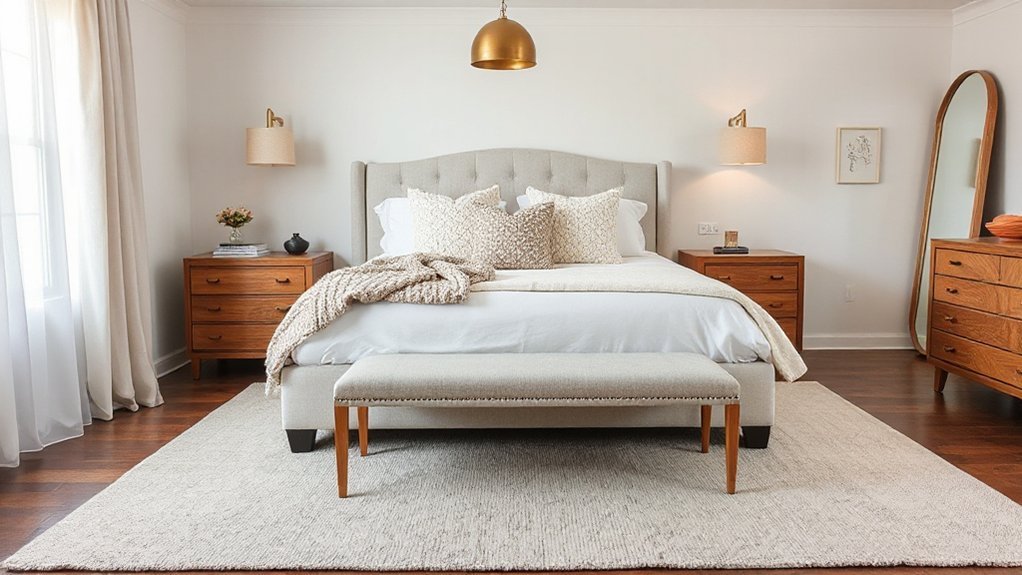
Before you shop for a single new textile or swap a bulb, map out your master bedroom refresh with a tight budget and a quick checklist so every change earns its footprint. Set a spending cap, then list what you’ll keep, move, replace, or repair.
Walk the room at day and night; note glare, shadows, and dead corners. Use Color psychology to pick one calming hue family, then decide where it lands: wall, art, or a single accent piece.
Apply feng shui principles by clearing pathways, anchoring the bed to a solid wall, and balancing nightstands for visual weight.
Measure clearances around drawers and doors, sketch a simple floor plan, and confirm your lighting layers: ambient, task, and soft dimmable glow.
Refresh Bedding With Layers and Texture
Start with a crisp base and mix fabrics and weaves—cotton percale, linen, and a chunky knit—so your bed catches light with subtle highs and lows.
Add cozy layering pieces like a quilt, coverlet, and a throw you can fold at the foot to keep the layout tidy and inviting.
Finish with texture-rich accents—matelassé shams, velvet pillows, or a nubby lumbar—that read warm under bedside lamps without adding visual clutter.
Mix Fabrics And Weaves
When the light shifts across your bed throughout the day, mixed fabrics make the difference between flat and layered. Start with crisp cotton sheets that catch morning brightness, then add a matte linen duvet cover to soften glare.
Introduce Textile combinations through a subtle herringbone sham or a ribbed knit euro—small-scale weaves read rich without busy pattern. Use Fabric contrasts intentionally: smooth percale beside nubby bouclé, or satin piping against washed canvas, so lamplight grazes edges and defines contours.
Keep the palette tight and let texture do the work. If your headboard sits low, choose thinner, tailored shams so the bed looks taller; if it’s tall, wider weaves balance the vertical plane. Rotate one fabric per season.
Add Cozy Layering Pieces
Although your sheets and duvet set the base, cozy layering pieces give the bed its lived-in depth and control how light plays across it. Add a quilt or coverlet you can fold at the foot so morning sun catches subtle ridges, while lamplight softens shadows at night.
Drape a lightweight throw diagonally to break up flat planes and guide the eye toward the pillows, making the whole surface feel intentional, not overstyled.
For tactile comfort, stack layers by weight: breathable blanket closest, warmer topper above, then your duvet. You’ll sleep cooler, adjust faster, and keep the bed looking fuller without bulk.
Keep edges aligned with the mattress corners for a cleaner footprint, and let one layer peek out by an inch or two for contrast.
Choose Texture-Rich Accents
Because light exaggerates every surface in a bedroom, choose accents that bring texture you can actually see—think nubby lumbar pillows, a boucle bench cushion, a woven basket for throws, or a ribbed ceramic lamp base. Keep your palette quiet so shadow and sheen do the work, especially beside a bright window or under warm bedside sconces.
Refresh bedding by stacking contrast: crisp percale sheets, a gauzy coverlet, then a chunky knit throw at the foot to anchor the bed visually. Add tactile decorative accents in pairs to balance the layout—two mismatched pillows, two low trays—so the room feels composed, not cluttered.
If your walls look flat at night, introduce textured wall treatments behind the headboard to catch raking light and deepen the whole scene.
Choose a Simple Color Palette (Fast Wins)
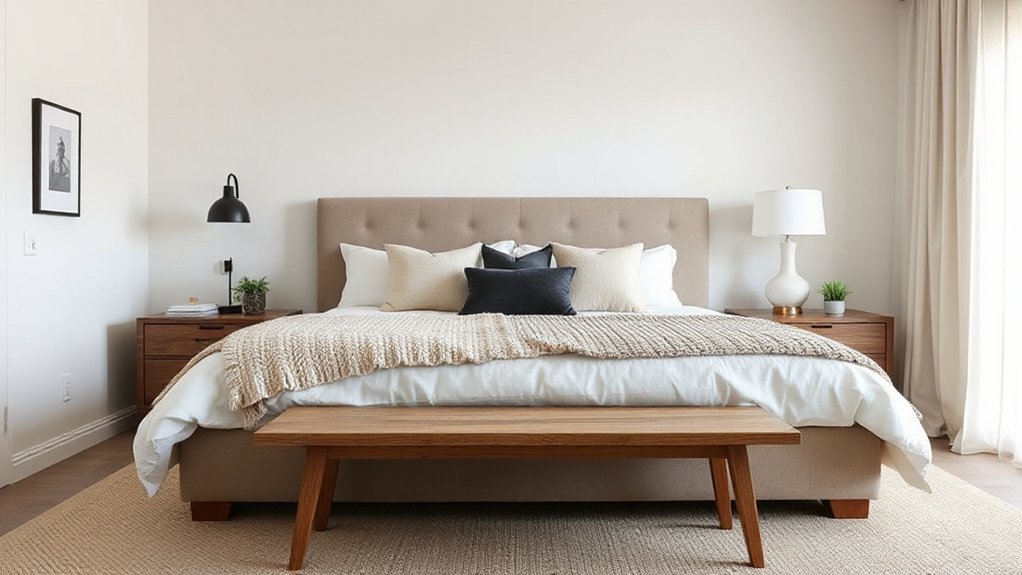
To get fast wins in a master bedroom refresh, lock in a simple color palette and let texture and light do the heavy lifting. Pick one warm neutral or one cool neutral, then add a single accent hue for depth. Keep color coordination tight: repeat that accent in pillows, art, and a throw, while staying within two to three tones overall.
Nail paint selection by matching undertones to your daylight: north light likes warmer whites; south light can handle crisper ones. Use a matte or eggshell on walls to soften glare, then bring in sheen with a lacquered tray, satin lampshades, or metallic hardware.
Layer whites, creams, and wood grains to feel intentional, not flat.
Improve Layout for Better Flow Around the Bed
Once your palette feels tight, the room’s comfort comes down to how you move around the bed—especially in morning light when every shadow and hard edge feels sharper.
Start by centering the bed on the strongest wall, then measure clearances: aim for 24–30 inches on each side so you don’t brush the duvet or bang a knee on a nightstand.
Keep furniture placement low and calm near pathways; swap bulky chests for a slim bench with a woven top that catches light without blocking steps.
Protect traffic flow by aligning drawers to open away from the main route to the door and bath.
If a rug feels bunched, shift it so your first step lands on soft pile, not cold floor.
Upgrade Lighting for Mood and Reading
Even if your layout finally feels effortless, the wrong lighting can flatten every texture and turn bedtime reading into a squint. Start by layering: a dimmable ceiling fixture or soft cove glow sets ambient ambiance, while bedside sconces keep surfaces clear and shadows controlled.
Aim beams across the headboard fabric and rug pile so their weave reads rich, not muddy.
For reading, choose adjustable arms or swivel shades that deliver task illumination directly onto the page, not into your partner’s eyes. Place switches where your hand naturally lands, and add warm bulbs (2700K–3000K) for skin-friendly calm.
Use two circuits or smart scenes: “Wind Down” for low glow, “Read” for crisp contrast, and “Rise” for gentle morning lift.
Add Hidden Storage to Make the Room Feel Bigger
Because a calm layout depends as much on what you *don’t* see as what you style, hidden storage can make your bedroom feel instantly larger without changing its footprint. Start with the bed: choose a platform with drawers or lift-up slats so bulky linens disappear and the floor reads as open, breathable negative space.
Add a nightstand with Hidden compartments to stash chargers, books, and eye masks, keeping the top surface clean for light to bounce.
Slide a slim dresser into a shadowy wall zone and use drawer dividers as quiet storage solutions that stop piles from spreading.
If your headboard sits proud, build a shallow ledge behind it for rarely used items.
Tuck hampers into closets so corners stay crisp and uncluttered.
Finish the Refresh With Rugs, Drapes, and Accents
You’ll lock in the refresh by layering rugs that warm up bare floors and define the bed zone underfoot. Hang drapes high and wide so they soften hard edges, filter daylight, and make the ceiling feel taller.
Then curate a tight edit of accent accessories—mixed textures, a few reflective touches—to catch lamplight without cluttering the layout.
Layer Rugs For Warmth
When the floor still feels a little bare after the big moves, layered rugs add instant warmth without stealing light or crowding your layout. Start with a low-pile, neutral base that tucks under the front two-thirds of the bed to anchor the frame and keep pathways crisp.
Then add a smaller, higher-texture topper—wool loop, vintage flatweave, or plush shearling—offset to one side where your feet land first.
Use Layer rugs to guide circulation: leave 18–24 inches of visible border so edges read intentional, not cramped.
If you’ve got Fireplace ambiance, choose a rug with subtle sheen or mottled pattern that catches flicker and lamplight, boosting depth while hiding everyday lint and footprints.
Hang Drapes To Soften
After you’ve anchored the floor with rugs, hang drapes to soften the hard lines of windows and walls while giving the light a prettier filter. Choose window treatments with enough fabric softness to look relaxed, not limp—think linen blends or brushed cotton that catch shadows and move slightly when air shifts.
Mount the rod wider and higher than the frame so panels stack off the glass and make the ceiling feel taller. Let hems kiss the floor for a tailored line, or hover a half inch for cleaner circulation near vents.
If you wake with strong morning sun, layer a sheer behind a blackout panel to tune brightness without flattening the room. Keep folds generous so light grazes the texture instead of bouncing hard.
Curate Accent Accessories
With drapes filtering the light and softening the window edges, let accent accessories carry that same layered feel across the rest of the room. Anchor the nightstands with decorative trays that corral a candle, hand cream, and a catchall, keeping surfaces calm while reflecting lamplight in small, controlled glints.
Add a ceramic vase or ribbed glass to echo the drape’s vertical fall, then balance it with a nubby box or woven bowl for tactile contrast.
Use artificial plants where daylight fades—on a dresser corner or high shelf—so greenery reads fresh without chasing the sun. Keep heights staggered, leave breathing room around the bed path, and repeat one metal finish to tie lighting, hardware, and accents into a cohesive glow.
Conclusion
You’ve turned your master bedroom into a quiet retreat that feels like a deep exhale. With layered bedding and touchable textures, the space reads warm and intentional. A simple palette keeps the eye calm while smart layout tweaks open clear paths around the bed, like smoothing wrinkles from a sheet. Dialed-in lighting—soft glow for mood, focused beams for reading—sets the tone. Hidden storage tucks clutter away, and rugs, drapes, and accents finish it.